2027 to 2029 Immigration Levels Plan: What It Means
Every fall, Canada releases its Immigration Levels Plan, and every fall employers and workers ask the same question: what does it mean for me? The 2027 to 2029 plan was released on November 5, 2026, and the headline is stability. Permanent resident targets stay at 380,000 a year, and new temporary resident arrivals stay at 370,000 a year.
For employers in Sault Ste. Marie and across Northern Ontario, that predictability matters when planning hiring, retention and timelines. For workers and families already in Canada, the plan also describes a time limited measure that could help up to 200,000 people already living here move toward permanent residence. This guide explains the official targets, what stayed the same, what is new, and what is still unclear as of November 27, 2026.
It also shows how the plan connects to the Rural Community Immigration Program and the extra provincial nominee spaces we covered in recent posts. Understanding the plan will not change your individual file, but it can help you plan your next steps with a licensed professional.
What Is the Immigration Levels Plan?
The Immigration Levels Plan is the federal government's three year roadmap for how many people Canada aims to welcome. It sets targets for permanent residents and for new temporary residents, meaning international students and temporary workers. Immigration, Refugees and Citizenship Canada (IRCC) publishes it every year, along with supplementary tables that break the numbers down by category.
It is important to understand what the plan is and is not. It is a set of targets and ranges, not a list of eligibility rules. It does not change how any single application is assessed, and it does not guarantee that a particular program will open or stay open.
Permanent Resident Targets for 2027 to 2029
IRCC holds overall permanent resident admissions at 380,000 in each of 2027, 2028 and 2029, within a range of 352,500 to 422,000. IRCC describes this as consistent with last year's plan. The 2027 breakdown by category is:
- Economic: 244,700, about 64% of the total
- Family: 81,000
- Refugees and protected persons: 49,300
- Humanitarian and compassionate and other: 5,000
The economic total of 244,700 includes several programs. Federal High Skilled admissions, which include the Express Entry streams, account for 100,000 of it. The rest is made up of other economic programs, including the Provincial Nominee Program, the Atlantic Immigration Program and the Rural Community Immigration Program. IRCC also says it is increasing planned admissions under the Provincial Nominee Program and the Atlantic Immigration Program to help provinces and territories meet regional economic needs.
The share of French speaking permanent residents outside Quebec rises each year. The targets are 9.5% in 2027, 10.5% in 2028 and 12% in 2029.
Temporary Resident Targets: Workers and Students
New temporary resident arrivals are targeted at 370,000 in each of the three years, within a range of 355,000 to 385,000. That total is made up of new temporary workers and new international students. For 2027, the targets are:
- Temporary workers: 220,000
- International Mobility Program: 170,000
- Temporary Foreign Worker Program: 50,000
- International students: 150,000
These targets count new arrivals. They do not describe how any one work permit, extension or study permit application will be decided. If you already hold a permit, the plan does not change its conditions or its expiry date.
What Stayed the Same and What Is New
Most of the headline numbers are unchanged. The permanent resident total of 380,000, the 370,000 new temporary arrivals, and the 220,000 temporary worker and 150,000 student targets are all described as consistent with last year's plan. That stability is the main message of the 2027 to 2029 plan.
Three things stand out as new or updated. First, IRCC says it is increasing planned admissions under the Provincial Nominee Program and the Atlantic Immigration Program. Second, the plan supports the Rural Community Immigration Program, which became a permanent pathway after the pilot. Third, the plan introduces a time limited measure for people already living in Canada, with space for up to 200,000 people, described below.
The Time Limited Measure for People Already in Canada
The plan introduces a time limited measure for 2027 to help people who are already in Canada move toward permanent residence. IRCC says it makes additional space for one year, outside of the Levels targets, and that it will help up to 200,000 people already living in Canada through two cohorts. Each cohort is for up to 100,000 people.
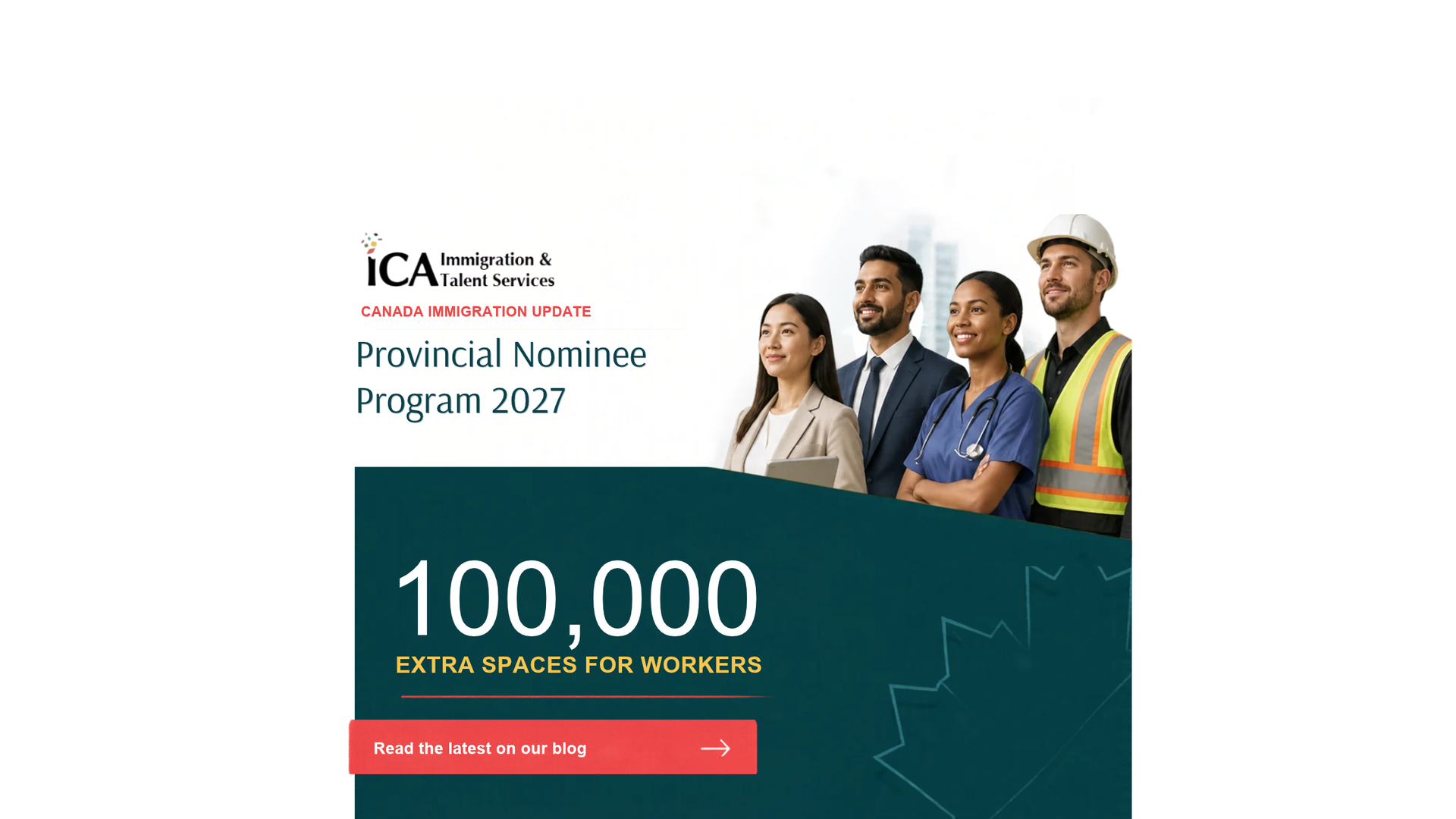
The workers cohort is for up to 100,000 workers already in communities outside Quebec, plus their families. IRCC says the federal government will work with provinces and territories to give them extra space through increases to their Provincial Nominee Program allocations, which they can use to nominate workers who meet regional needs. Provinces and territories can also identify workers who have already applied under select federal programs, including the Atlantic Immigration Program, the Start-Up Visa Program, the Self-Employed Persons Program, the Agri-Food Pilot and the home care worker programs. If you are a worker whose employer supports your future in Canada, read our recent post on the extra provincial nominee spaces for workers to see how provinces may use their allocations.
The humanitarian cohort is for up to 100,000 people already in Canada, many of whom have waited years for a decision. IRCC says it includes spouses, common law partners and dependent children of Canadians and permanent residents in Canada who are awaiting a final decision. It also covers remaining applications under the Hong Kong pathway and the Ukraine Family Reunification Pathway, and applicants already found eligible on humanitarian and compassionate grounds.
IRCC says the measure helps reduce application inventories and is in addition to the regular Humanitarian and Compassionate and Other targets. Eligibility depends on the specific pathway, so it is wise to check IRCC's official pages and speak with a licensed professional before assuming the measure applies to you.
What It Means for Employers in Northern Ontario
For employers, stable targets mean a more predictable environment. The Temporary Foreign Worker Program target of 50,000 new arrivals a year, alongside 170,000 under the International Mobility Program, tells you that temporary hiring remains part of the plan. It does not mean an application will be approved, and rules around the Labour Market Impact Assessment still apply.
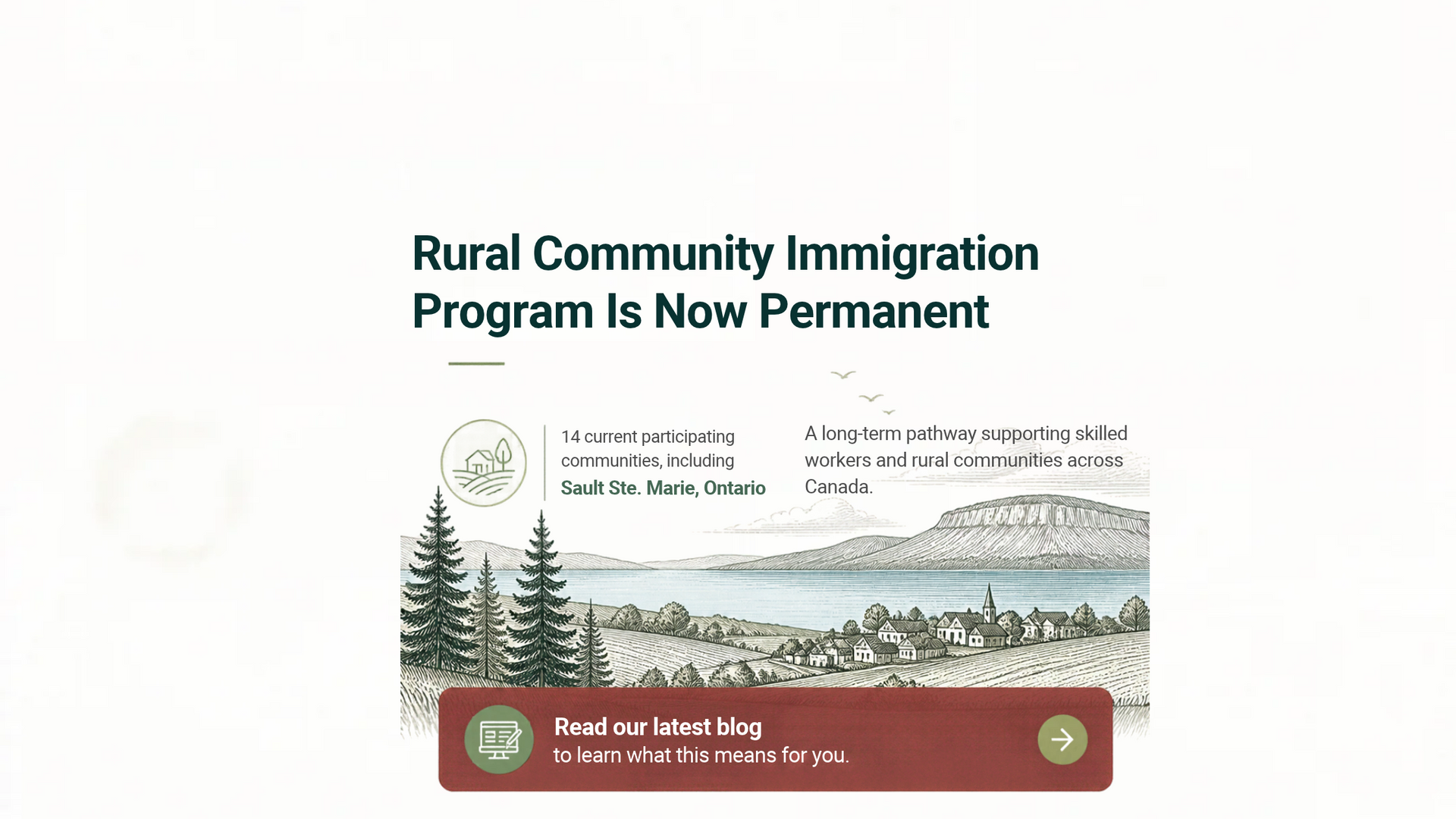
Employers in communities like Sault Ste. Marie should also pay attention to regional pathways. The plan supports the Rural Community Immigration Program and increased planned provincial nominee admissions, both of which are designed around local labour needs. Employers with foreign workers already on payroll should review which of those workers have pending files or upcoming permit expiry dates, so there is time to plan, and which may fall within the workers cohort of the time limited measure.
A practical step is to build a simple hiring and retention timeline now. Note when each foreign worker's permit ends, which programs may apply, and what documents will be needed. A licensed professional can help you match your situation to the right pathway.
What It Means for Workers and Families
If you are a worker or student in Canada, the plan does not change the conditions of your permit. What it offers is context. Stable targets suggest the overall system is not expected to shift dramatically in 2027, although individual programs can still change their rules.
If you already have a permanent residence application in progress, keep your contact details current with IRCC and respond to any requests quickly. If you are considering an application, focus on the requirements of the specific program, not on the national totals. Targets describe how many people Canada plans to admit, not how likely any individual is to be selected.
What Is Still Unclear
As of November 27, 2026, IRCC has not provided further clarification on how many of the extra spaces in the workers cohort each province or territory will receive. The Levels Plan pages also do not give details for every pathway, and the targets for 2028 and 2029 are notional. IRCC says they will be confirmed or adjusted by November 1 of next year.
It is wise to treat anything beyond the official figures with caution. Immigration programs can change, and details often appear on separate IRCC pages after the plan is released. Always check the current IRCC page before making a decision.
Plan Your Next Step with iCA
Whether you are an employer planning your next hire or a worker thinking about your future in Canada, the best approach is to match the plan to your own situation. iCA Immigration and Talent Services is led by Jennifer Johnson, a Regulated Canadian Immigration Consultant (RCIC) based in Sault Ste. Marie.
Book a paid consultation to talk through your options: Book a consultation
Frequently Asked Questions
1. What is the Immigration Levels Plan?
The Immigration Levels Plan is the federal government's three year set of targets for how many permanent residents and new temporary residents Canada aims to welcome. IRCC publishes it each year with supplementary tables that break down the numbers by category. It is a planning document, not a list of eligibility rules, so it does not change how an individual application is assessed.
2. How many permanent residents will Canada admit in 2027?
The target is 380,000 permanent residents in 2027, within a range of 352,500 to 422,000. About 244,700 of those are in the economic category, 81,000 are family, 49,300 are refugees and protected persons, and 5,000 are humanitarian and compassionate and other. IRCC describes the overall number as consistent with last year's plan.
3. Does the plan change the rules for my work permit or application?
No. The plan sets targets, not eligibility requirements. Your work permit conditions, expiry date and application requirements stay the same unless IRCC announces a separate change. If you are unsure how the plan affects your situation, speak with a licensed immigration professional and check the current IRCC page for your program.
4. Does the plan help employers in Northern Ontario?
It offers more predictability. Temporary worker targets are stable, and IRCC says it is increasing planned admissions under the Provincial Nominee Program and the Atlantic Immigration Program. The plan also supports the Rural Community Immigration Program. None of this guarantees an approval, so employers should still follow the rules for each program and plan their timelines early.
5. Are the 2028 and 2029 numbers final?
No. IRCC says the targets and ranges for 2028 and 2029 are notional and will be confirmed or adjusted by November 1 of next year. The 2027 numbers are the firm ones for now. This is why it helps to review your plans each year instead of relying on projections for later years.
References
- Canada's immigration levels, IRCC
- Supplementary Information for the 2027 to 2029 Immigration Levels Plan, IRCC
- Managing a responsive and predictable immigration system, IRCC
- Building a stronger Canada through a well managed, predictable immigration system, IRCC backgrounder
- Canada takes action to efficiently process existing permanent residence applications for Ukrainians and Hong Kongers, IRCC news release, November 10, 2026
Note: This article is general information only and is not legal advice. Immigration rules and programs can change, so always confirm current requirements on the official IRCC website. As of November 27, 2026, IRCC has not provided further clarification on how many of the workers cohort spaces each province or territory will receive.